

Customised MRD solution for Solid Organ Cancer
CancerTrack MRD is an ultrasensitive, dual-approach molecular residual disease detection assay that combines tumour-informed and tumour-agnostic strategies to identify even trace amounts of circulating tumour DNA in blood.
What is CancerTrack MRD?
CancerTrack MRD is a customised panel that detects molecular residual disease (MRD) based on deep sequencing of tumour tissue and blood. This advanced method identifies even small amounts of residual disease (ctDNA) in the bloodstream, providing critical insights for adjuvant therapy decisions and enabling early detection of recurrence.
Why MRD Matters
The molecular evolution of a tumour — including size and molecular diversification — is a continuous process that can progress rapidly. Early detection of recurrence or drug resistance is essential to keep cancer under control and support timely clinical decisions.
A Unique Dual Approach
Unlike standard ctDNA tests, CancerTrack MRD uses both tumour-informed and tumour-agnostic strategies. This dual approach captures personalised mutations from the original tumour as well as newly emerging clones — addressing tumour evolution and heterogeneity.
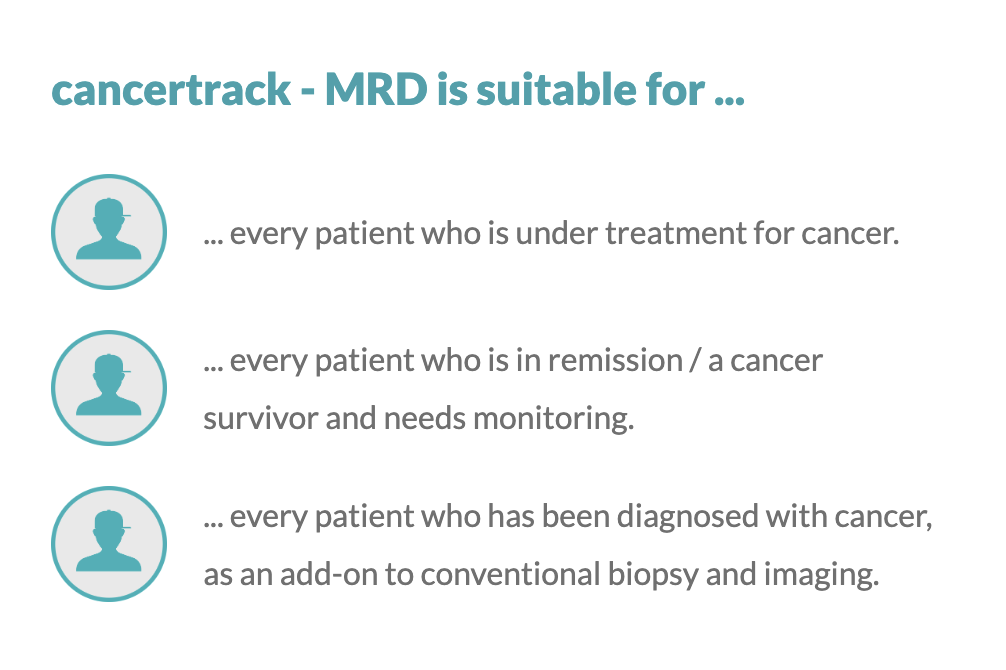

What can Cancertrack reveal?

FAQ

Why is early detection of molecular dynamics of cancer critical?
The molecular evolution of the tumour, including tumour size and molecular diversification, is a continuous process that can progress at high speed. Therefore, early detection of recurrence or drug resistance is essential to keep the cancer under control.
How frequently is it necessary to perform the test?
Cancertrack should ideally be performed at every important milestone in the fight against cancer and especially when the tumour has disappeared from conventional imaging / patient is under follow-up for recurrence monitoring, but usally every 3 - 12 months.
Sample requirement and Turn Around Time (TAT)
15 – 20 ml blood in DCGL and EDTA tubes
8 – 10 days from receipt of the sample
CONTACT
Cancer Profiling Australia
903/50 Clarence Street,
SYDNEY NSW 2000
PH +61 1300 282 482
FAX +61 2 8088 7097
Email: info@cancerprofiling.com.au